
Didcot Primary Academy
Computing
Intent
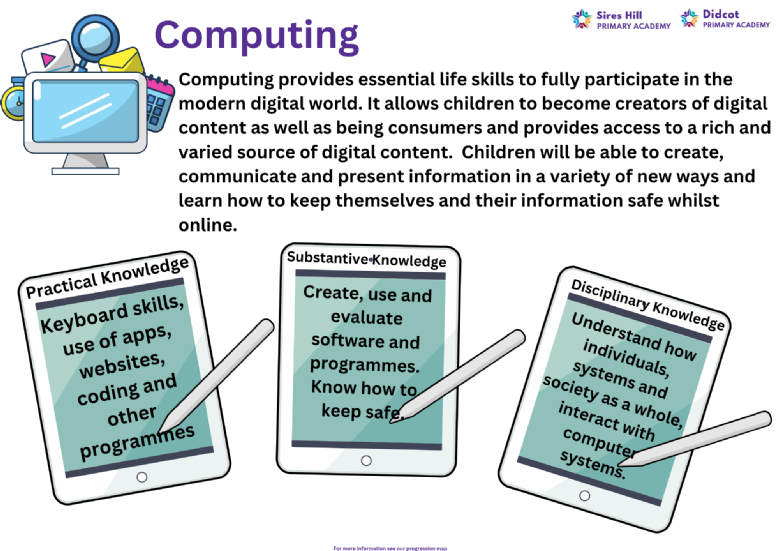
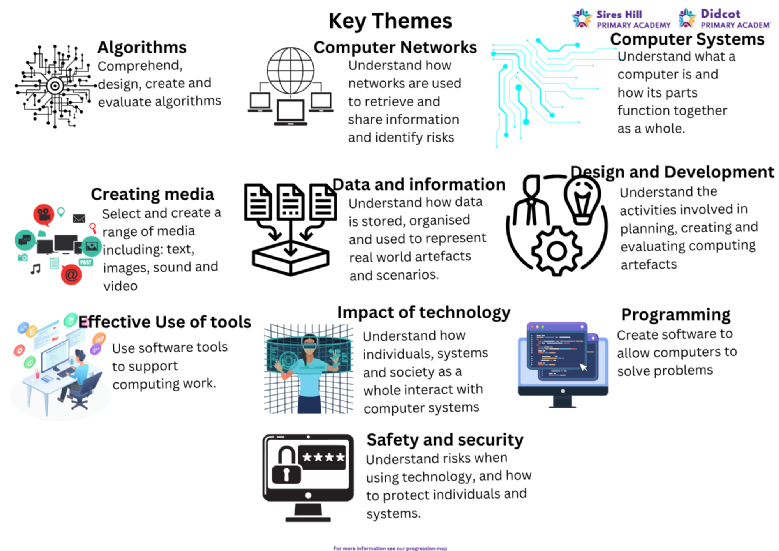
At Didcot Primary Academy we intend to expose children to a range of technology and its wide variety of uses. Units are based around computing systems and networks, creating media, programming, data and information. We follow lesson from ‘Teach Computing’, a scheme with full links to the national curriculum built around an innovative progression framework. Children have lessons every week and throughout the year work with ipads, beebots and chrome books to develop their skills.
Implement
What to expect
Computing lessons begin with a clear learning intention and steps to success. Previous learning is recapped, and a clear explanation of specific terminology is then discussed. Sometimes during the main activity children are shown how to use specific programs and other times they explore for themselves first. This could be anything from using computers to create artwork, design their own webpage or programming micro:bit. Children are then given a chance to implement their new learning before reflecting back on what they have learnt.
| Autumn 1 | Autumn 2 | Spring 1 | Spring 2 | Summer 1 | Summer 2 | |
| Nursery | Across the year: Use a variety of digital technology ;follow simple instructions, use age appropriate software. | |||||
| Reception | Across the year: Know that digital technology is used for communication. E-safety introduction, inputting instructions into floor robots; use age appropriate software | |||||
| Year 1 |
Computer systems and networks Recognising technology in school and using it responsibly. |
Creating media - Digital Painting Choosing appropriate tools in a program to create art, and making comparisons with working non-digitally. |
Programming A - Moving a robot Writing short algorithms and programs for floor robots, and predicting program outcomes. |
Data and Information - Grouping data Exploring object labels, then using them to sort and group objects by properties. |
Creating Media Digital writing Using a computer to create and format text, before comparing to writing non-digitally. |
Programming B - Programming animations Designing and programming the movement of a character on screen. |
| Year 2 |
Computer Systems and Networks - Information technology around us Identifying IT and how its responsible use improves our world in school and beyond. |
Creating Media - Digital photography Capturing and changing digital photographs for different purposes. |
Programming A - Robot algorithms Creating and debugging programs, and using logical reasoning to make predictions. |
Data and Information Pictograms Collecting data in tally charts and using attributes to organise and present data on a computer. |
Creating Media Digital music Using a computer as a tool to explore rhythms and melodies, before creating a musical composition. |
Programming B - Programming quizzes Designing algorithms and programs that use events to trigger sequences of code to make an interactive quiz. |
| Year 3 |
Computer Systems and Networks - Connecting computers Identifying that digital devices have inputs, processes, and outputs, and how devices can be connected to make networks. |
Creating Media Stop-frame animation Capturing and editing digital still images to produce a stop-frame animation that tells a story. |
Programming A - Sequencing sounds Creating sequences in a block-based programming language to make music. |
Data and Information Branching databases Building and using branching databases to group objects using yes/no questions. |
Creating Media - Desktop publishing Creating documents by modifying text, images, and page layouts for a specified purpose. |
Programming B - Events and actions in programs Writing algorithms and programs that use a range of events to trigger sequences of actions. |
| Year 4 |
Computer Systems and Networks - The internet Recognising the internet as a network of networks including the WWW, and why we should evaluate online content. |
Programming A - Computational Thinking Developing logical thinking skills in preparation for text based programming. |
Programming A - Repetition in shapes Using a text-based programming language to explore count-controlled loops when drawing shapes |
Data and Information Data logging Recognising how and why data is collected over time, before using data loggers to carry out an investigation. |
Creating Media Photo editing Manipulating digital images, and reflecting on the impact of changes and whether the required purpose is fulfilled. |
Programming B - Repetition in games Using a block-based programming language to explore count-controlled and infinite loops when creating a game. |
| Year 5 | Computer Systems and Networks - Systems and searching Recognising IT systems in the world and how some can enable searching on the internet. |
Creating Media Introduction to vector graphics Creating images in a drawing program by using layers and groups of objects. |
Programming A - Selection in physical computing Exploring conditions and selection using a programmable microcontroller. |
Data and Information Flat-file databases Using a database to order data and create charts to answer questions. |
Creating Media - Video production Planning, capturing, and editing video to produce a short film. |
Programming B - Selection in quizzes Exploring selection in programming to design and code an interactive quiz. |
| Year 6 |
Computer Systems and Networks - Communication and collaboration Exploring how data is transferred by working collaboratively online. |
Creating Media - Webpage creation Designing and creating webpages, giving consideration to copyright, aesthetics, and navigation. |
Programming A - Variables in games Exploring variables when designing and coding a game. |
Data and Information Introduction to spreadsheets Answering questions by using spreadsheets to organise and calculate data. |
Programming – Computational Thinking Using Bebras challenges to develop logical thinking and problem solving skills. |
Programming B - Sensing movement Designing and coding a project that captures inputs from a physical device. |
Impact
Providing our pupils with high quality computing is something we pride ourselves with here at Didcot Primary Academy. As a result, we have seen high levels of engagement from the children and a large progression in their computing skills. Many children achieve the expected standard for computing. We have also implemented a ‘digital council’ where children organise school events such as internet safety day, monitor the care of equipment and impart knowledge to support the younger children.


 Be Kind, Be Brilliant